Labs / L-02 · The house’s arcade · Live
DZND PLAY
Your arcade and your collection, in one place.
DZND’s own arcade, behind the controller in the middle of the homepage: original games on one shelf of 8-bit cartridges, cards to collect in a Binder, a community to talk, trade and duel in, and one player across all of it.
01 / The mark
DZND, then PLAY in gold.
The first thing a player sees: the house’s name in small letters over PLAY, struck in gold in PLAY’s own bold pixel type, glowing over Orbital Wahala’s station at night above the Lagos lagoon while the arcade loads.
DZND

On the home screen
Saved to a phone, PLAY is DZND’s monogram drawn in 8-bit, white on navy: a drawing of 24 cells, always shown at a whole number of screen pixels a cell, so it stays sharp at every size.
02 / The door
Found, not advertised.
PLAY began with the owner’s brief of October 2026: small games behind the controller on the homepage, found rather than advertised. Play comes first and identity second. Anyone plays at once; entering the weekly ranking takes a name and an email.
PLAY has no place in the menu. It waits behind the controller in the middle of the homepage and opens over the page, which loads none of the games until the controller is pressed.
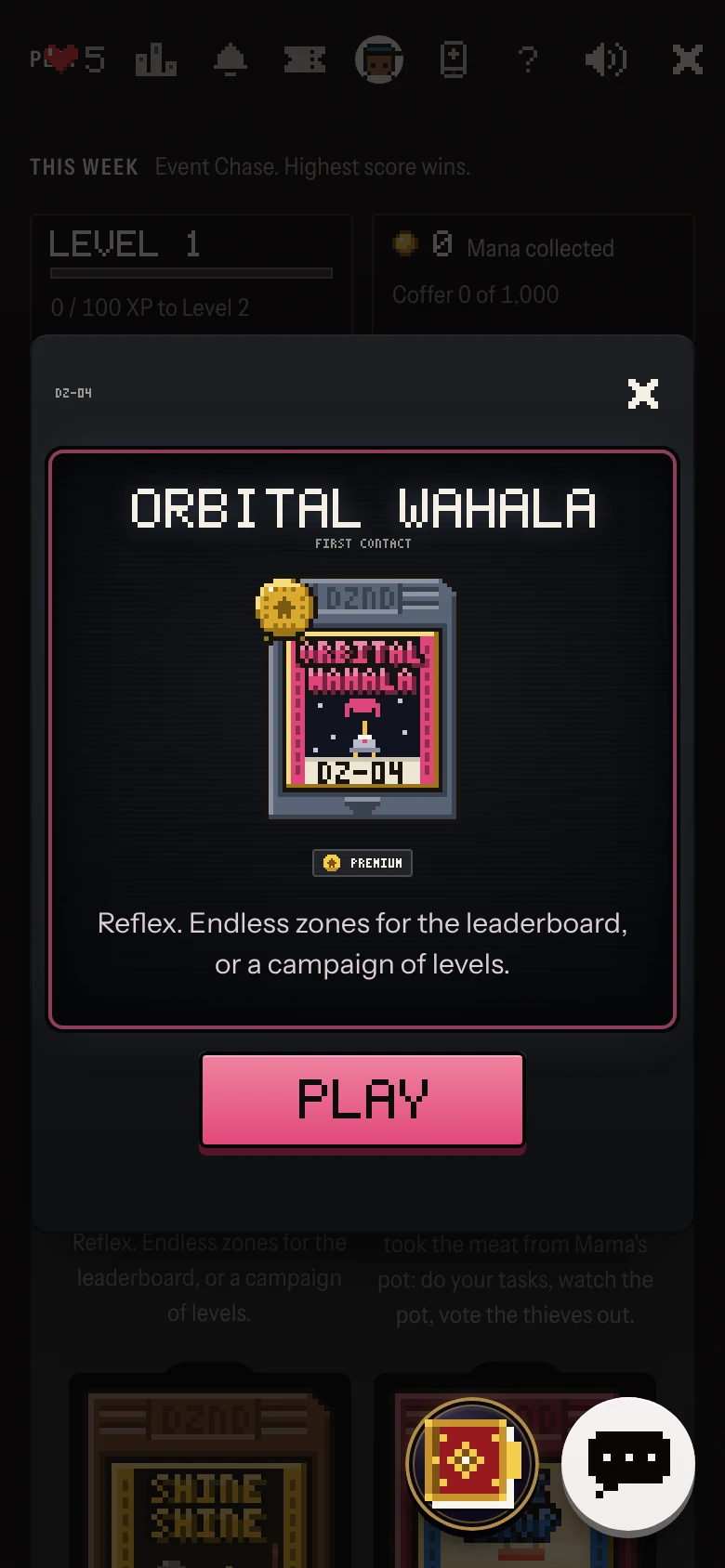
A cartridge opens its game’s screen first: a small arcade screen switched on over the holder, with the game’s number, its art, its line and PLAY. Only PLAY starts a game.
03 / The shelf
Six cartridges, one case.
The games sit as cartridges in an arcade holder, a dark moulded case with fitted bays. Each game’s cartridge, colours, place on the shelf and status are set in The House, and a change reaches a player already on the shelf within a minute.
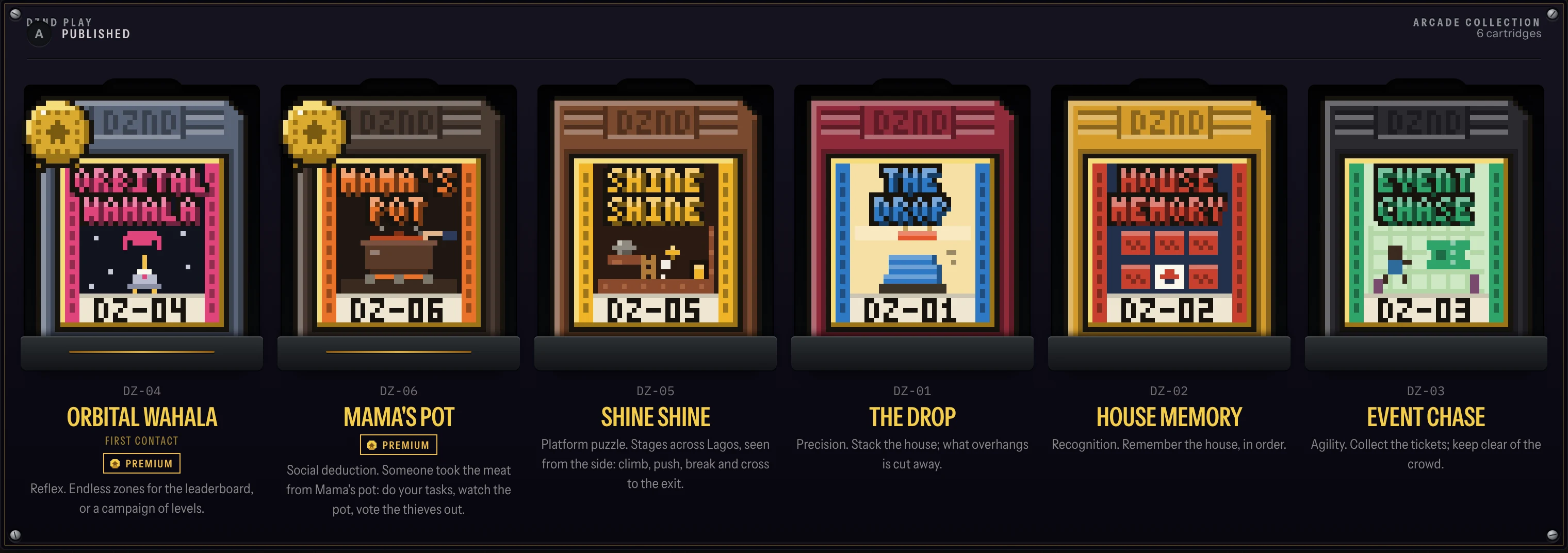
- Side A
- The public catalogue, the only side players are shown. Side B holds the games still being made, for staff only.
- Statuses, in words
- Premium, Repairs and Building are drawn on the cartridge and printed under it, never shown by colour alone.
- Depth from CSS
- The case, its rim, its screws and each bay’s shadow are CSS: inset and cast shadows and gradients, no 3D library.
04 / The games
Six games, each its own kind of play.
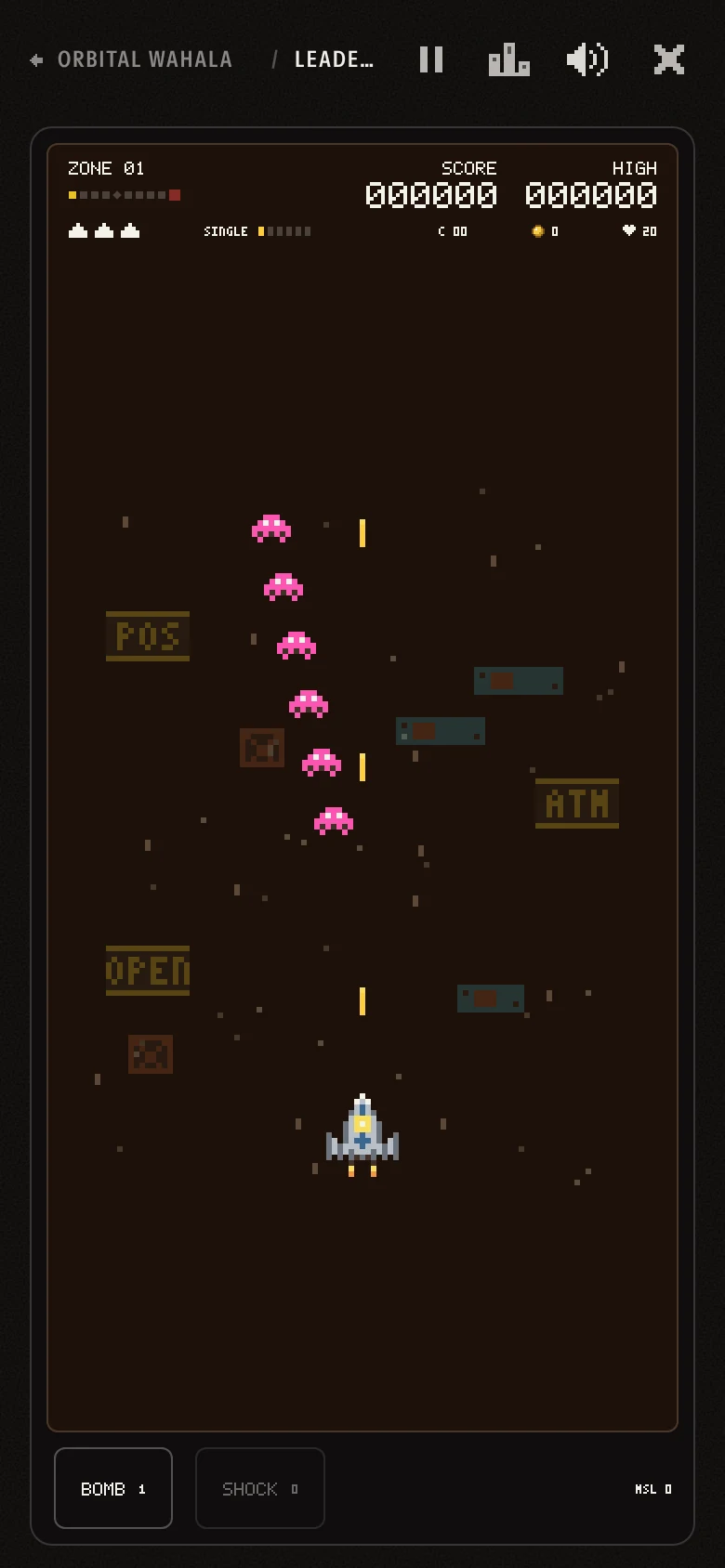
DZ-04
ORBITAL WAHALA: First Contact
Endless zones for the leaderboard, or a campaign of levels.
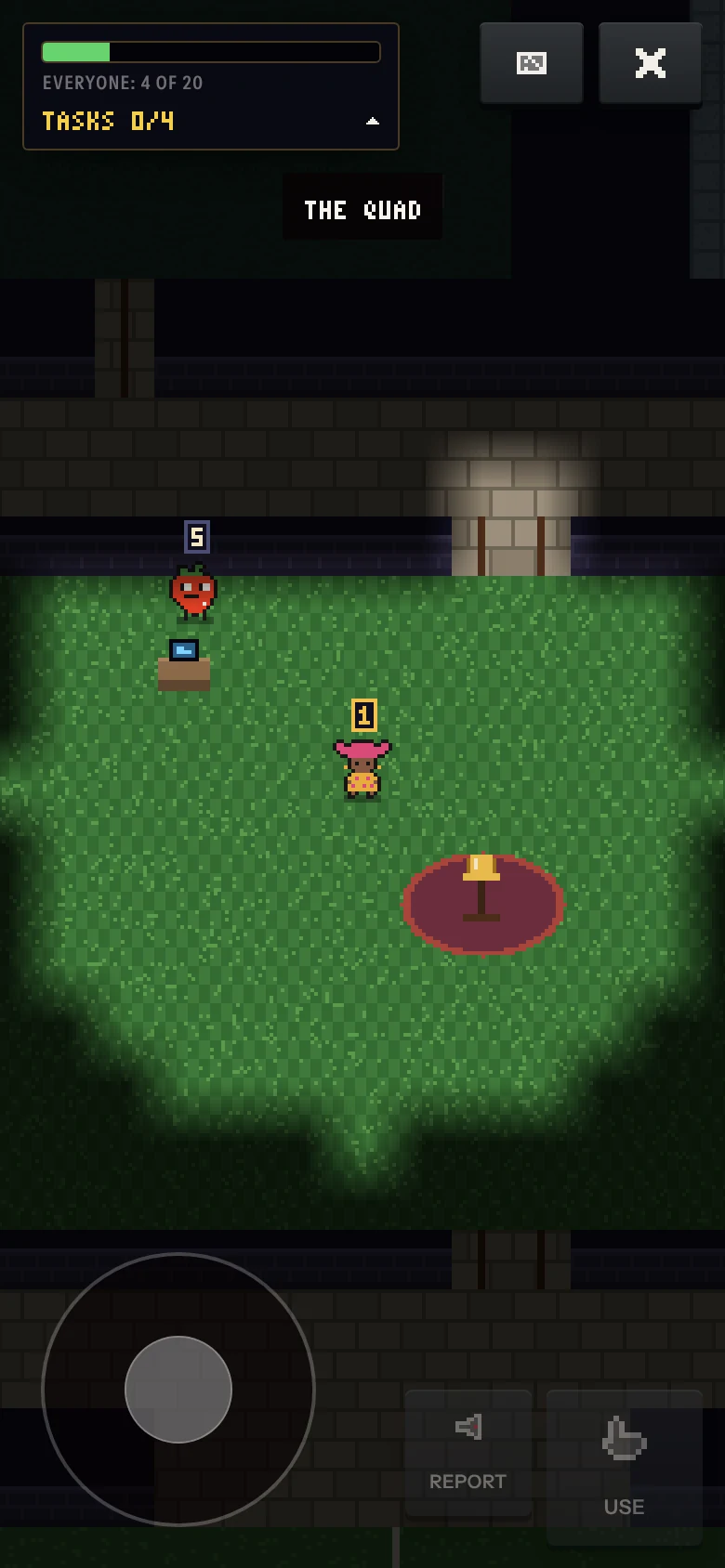
DZ-06
Mama's Pot
Someone took the meat from Mama's pot: do your tasks, watch the pot, vote the thieves out.
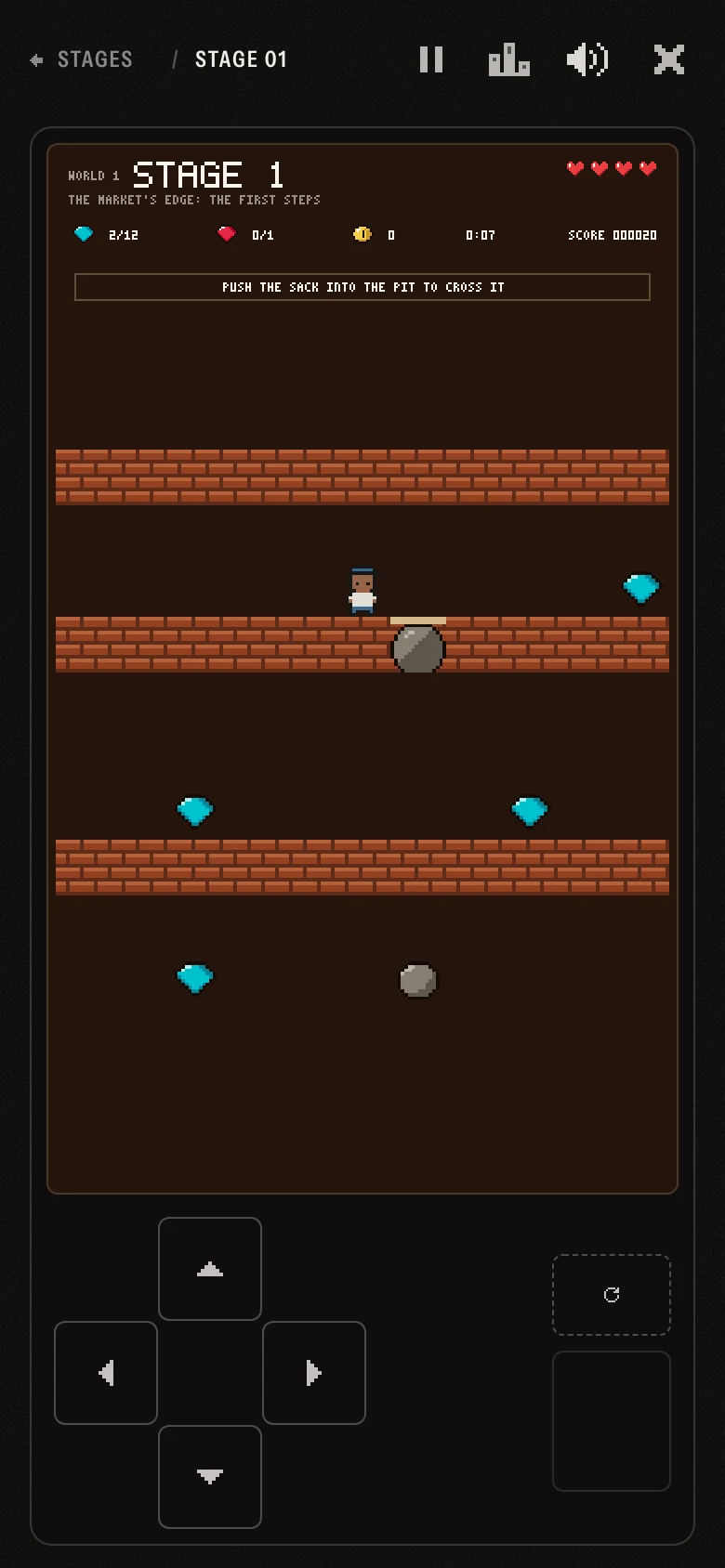
DZ-05
Shine Shine
Stages across Lagos, seen from the side: climb, push, break and cross to the exit.
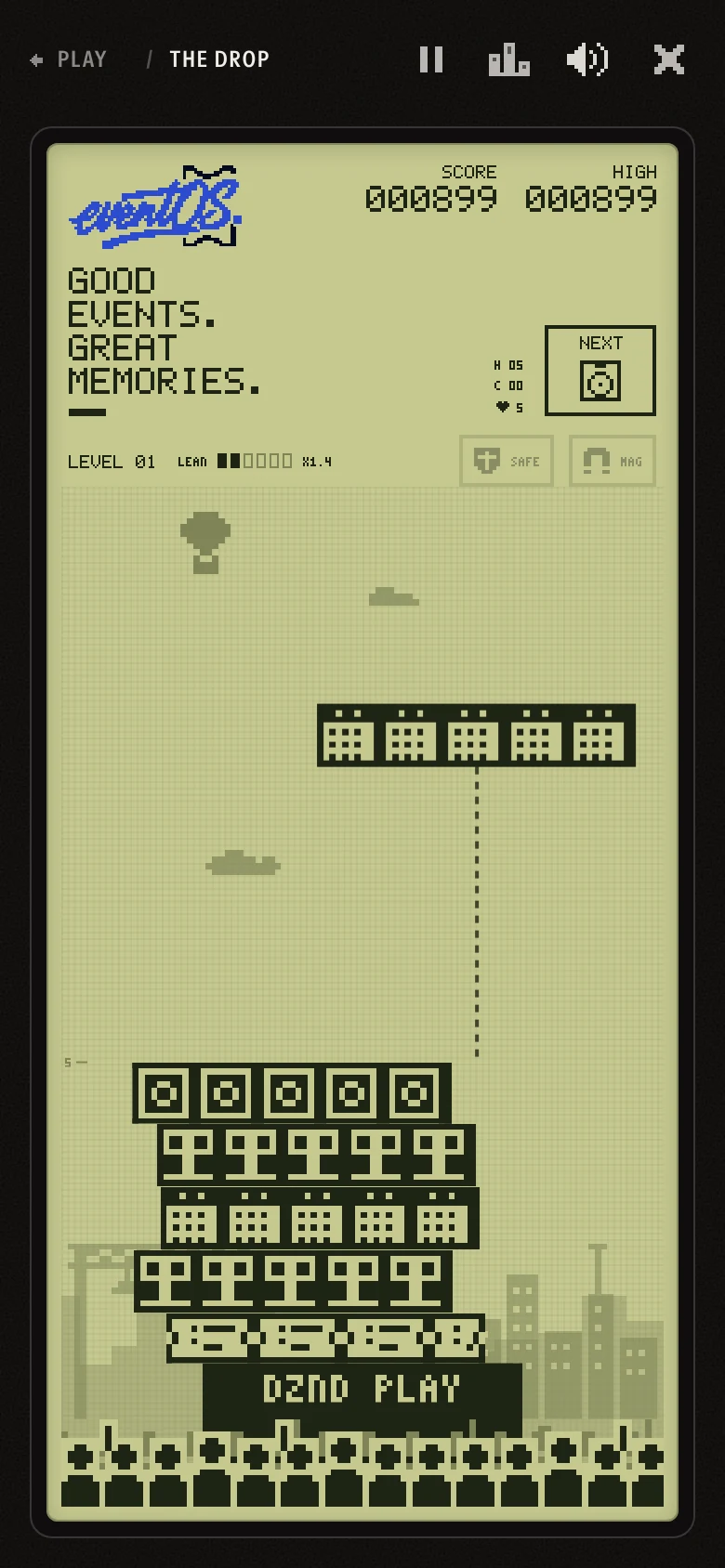
DZ-01
The Drop
Stack the house; what overhangs is cut away.
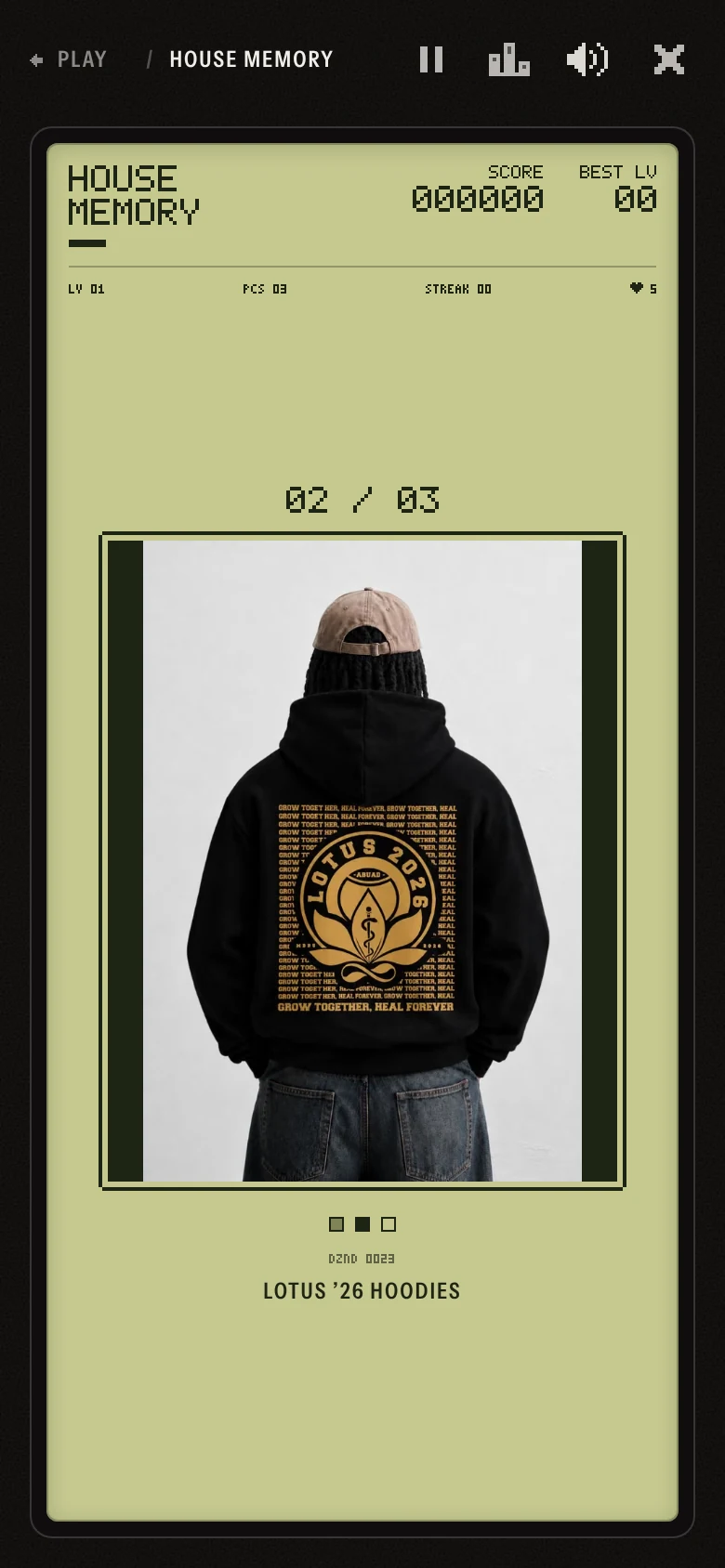
DZ-02
House Memory
Remember the house, in order.
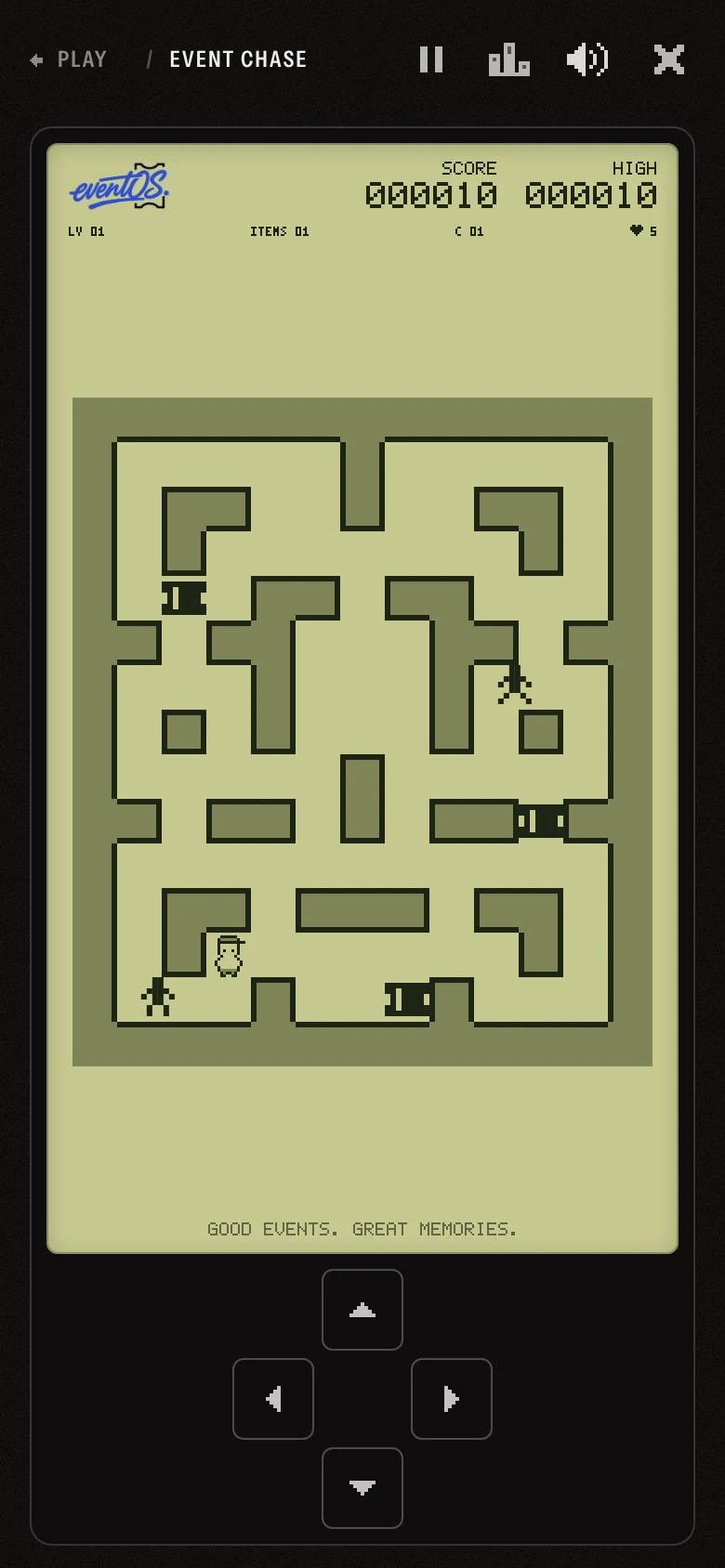
DZ-03
Event Chase
Collect the tickets; keep clear of the crowd.
05 / The collection
Cards to collect, and a Binder to keep them.
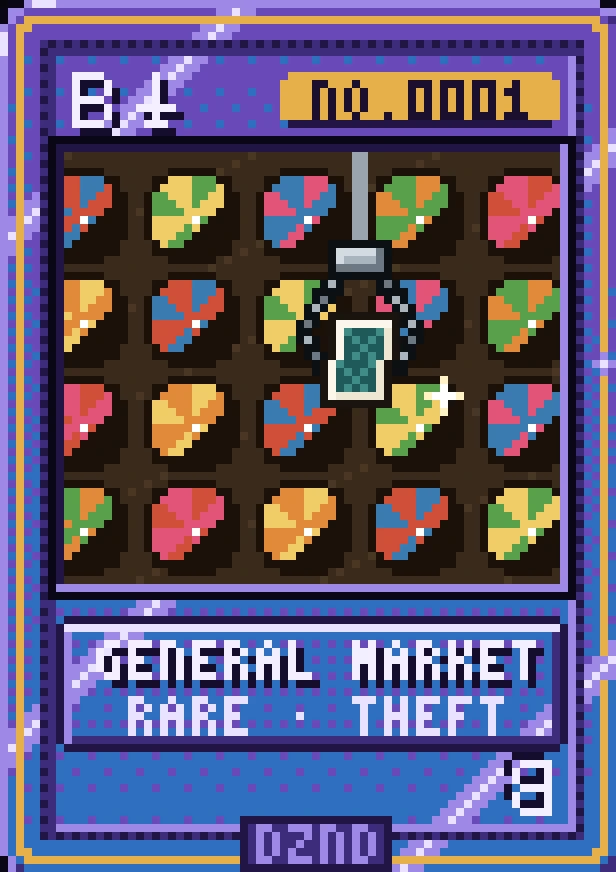
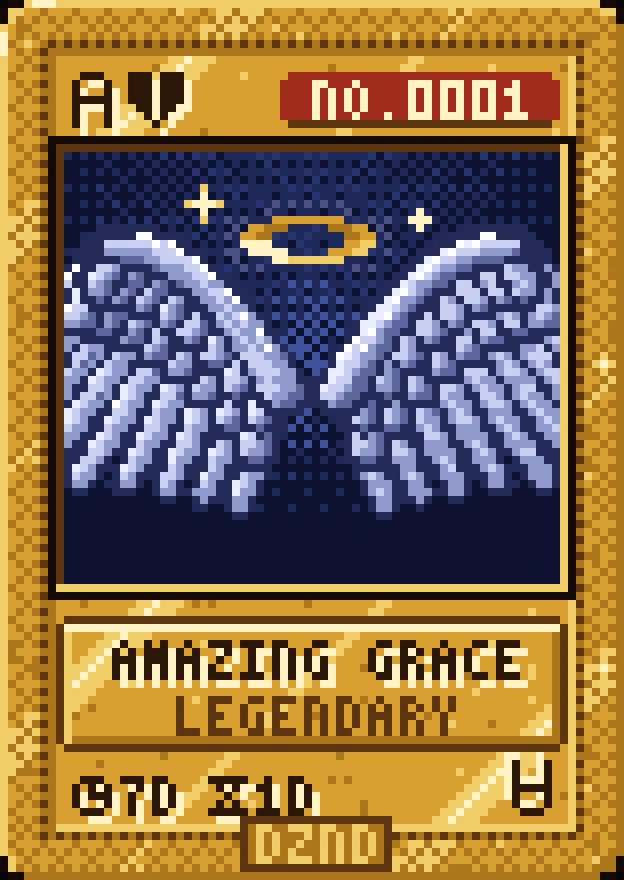
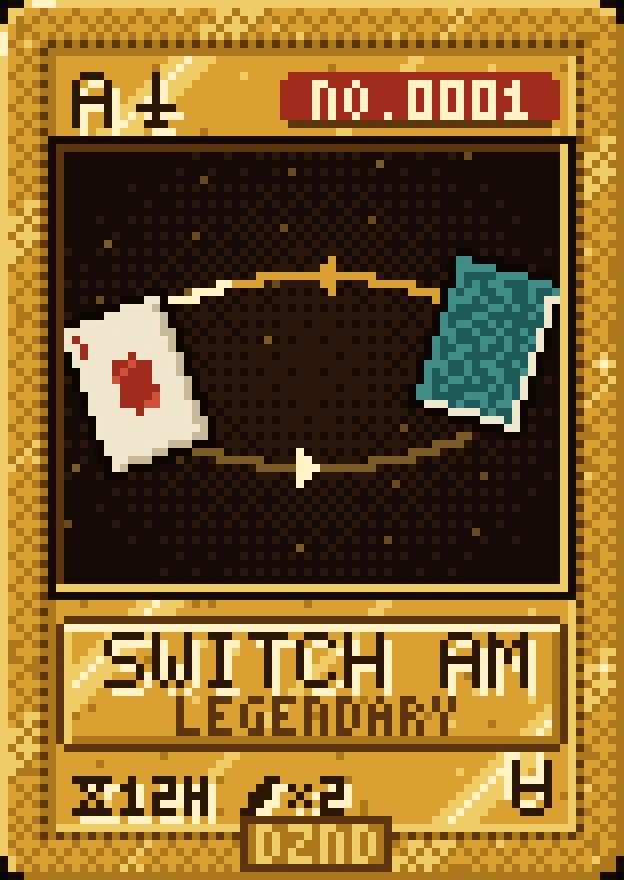
Every counted run can drop a card. Each is numbered, kept in the player’s Binder, and can be used, sent, traded or locked away.
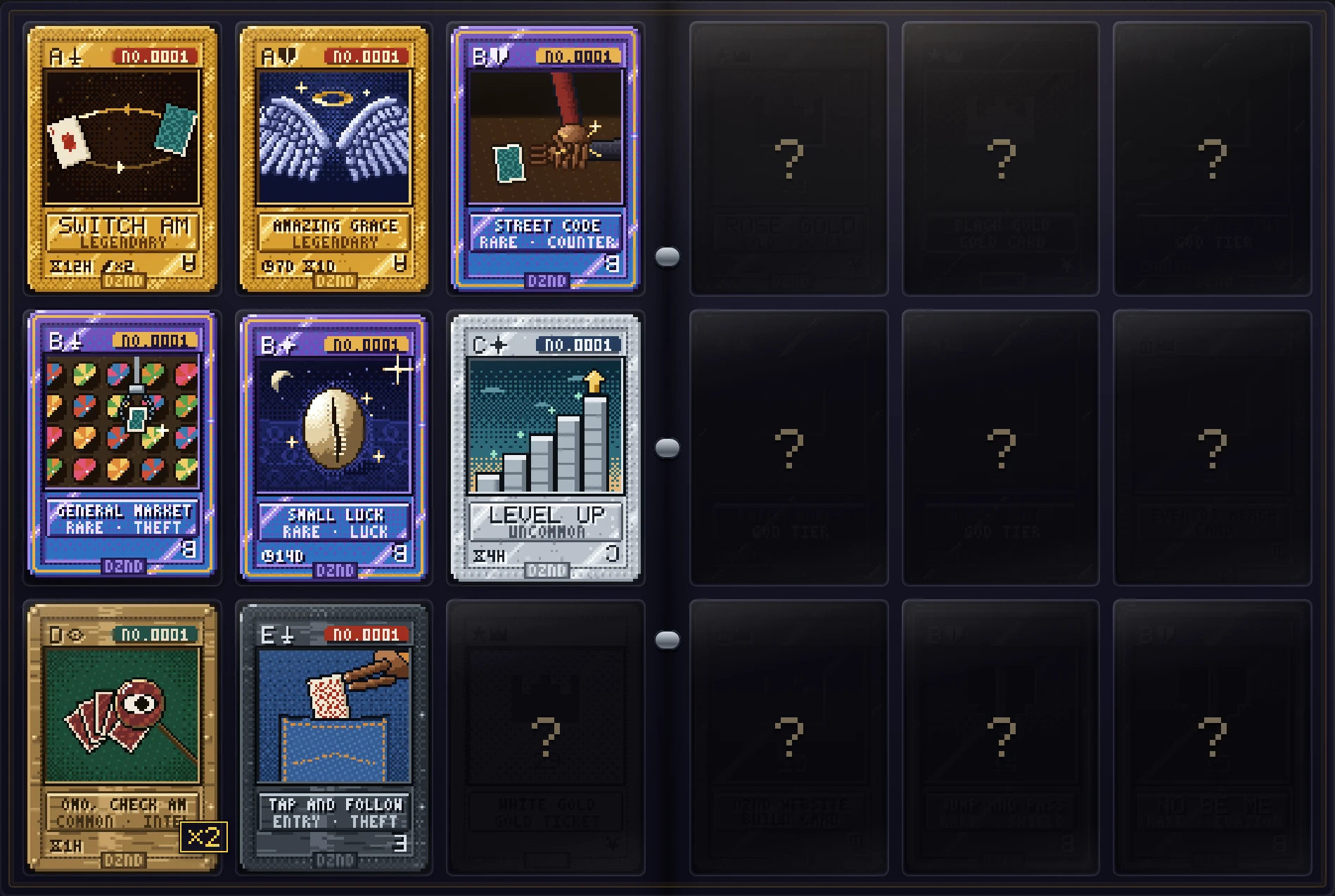
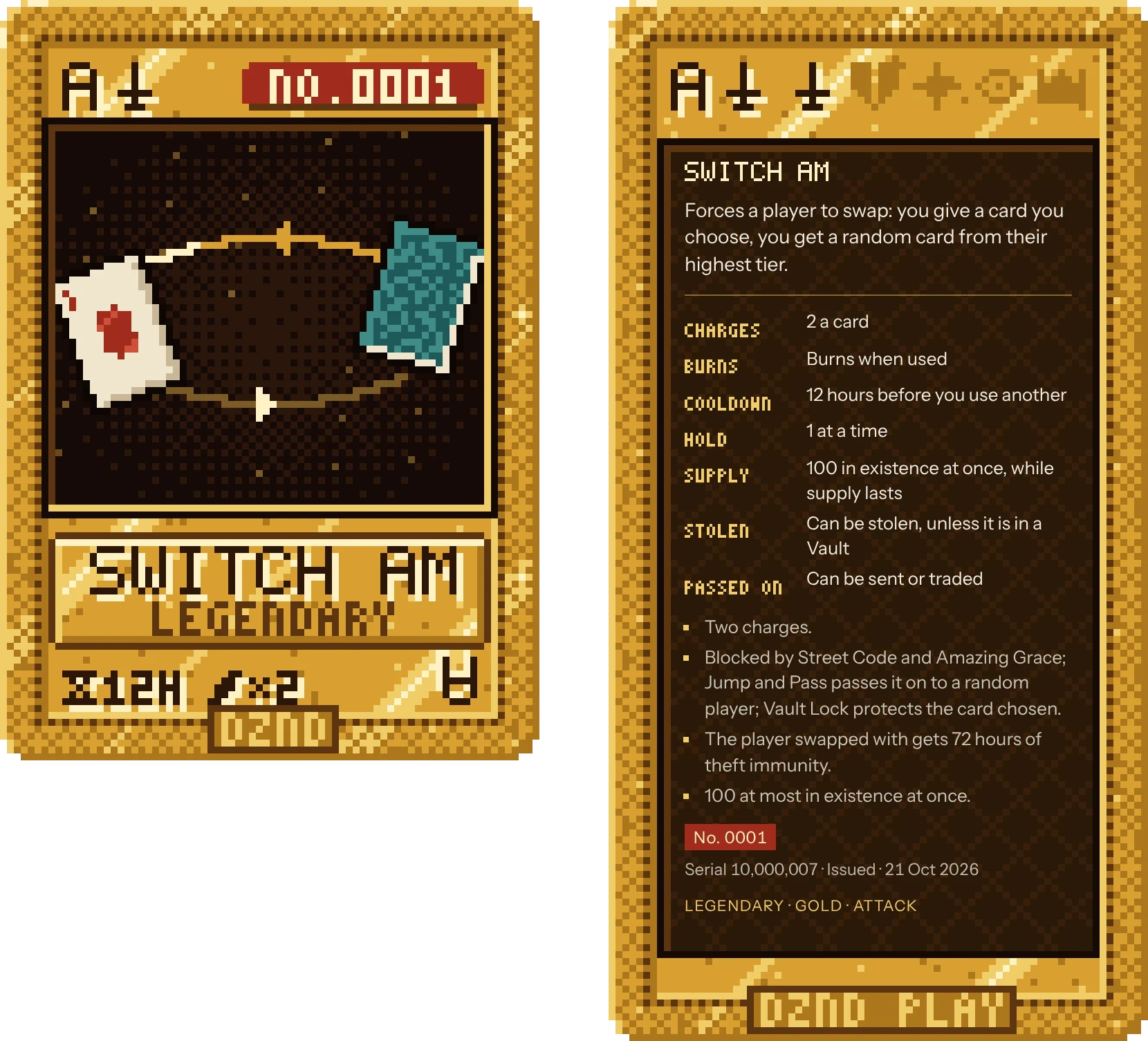
- The face
- Its picture, its name and tier, its number (No. 0001 is the first of its kind) and its timings.
- The back
- What it does, in plain words, and its rules: charges, cooldown, how many a player may hold, the supply, and whether it can be stolen or passed on.
- The metal
- Each tier has its own: Entry gunmetal, Common bronze, Uncommon sterling silver, Rare anodised titanium, Legendary gold, God Tier black chrome with crimson enamel.
Switch Am
Amazing Grace
General Market
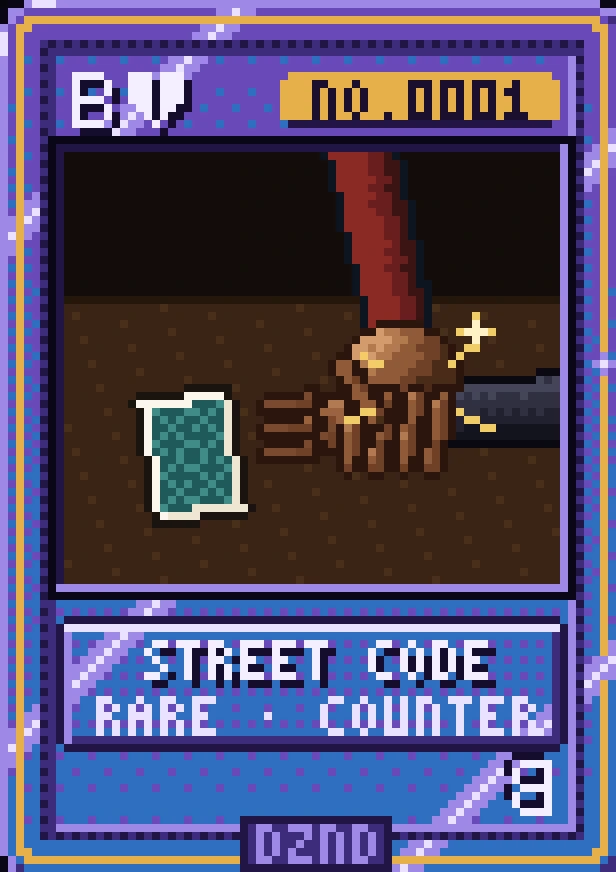
Street Code
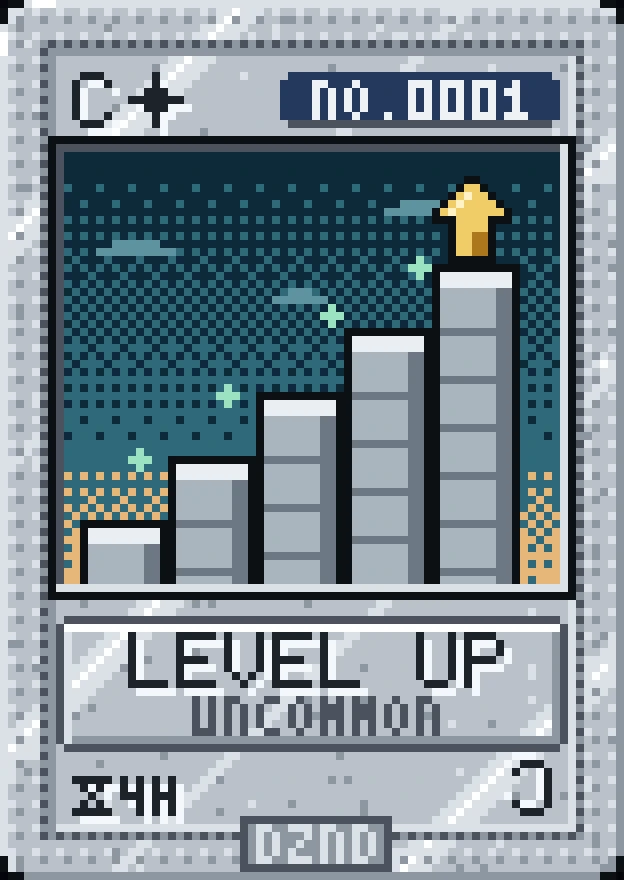
Level Up
Packs
Five cards to a pack, at least one Rare or better. A pack waits on its shelf, sealed, until it is opened: the cards are dealt face down and turned over one by one.
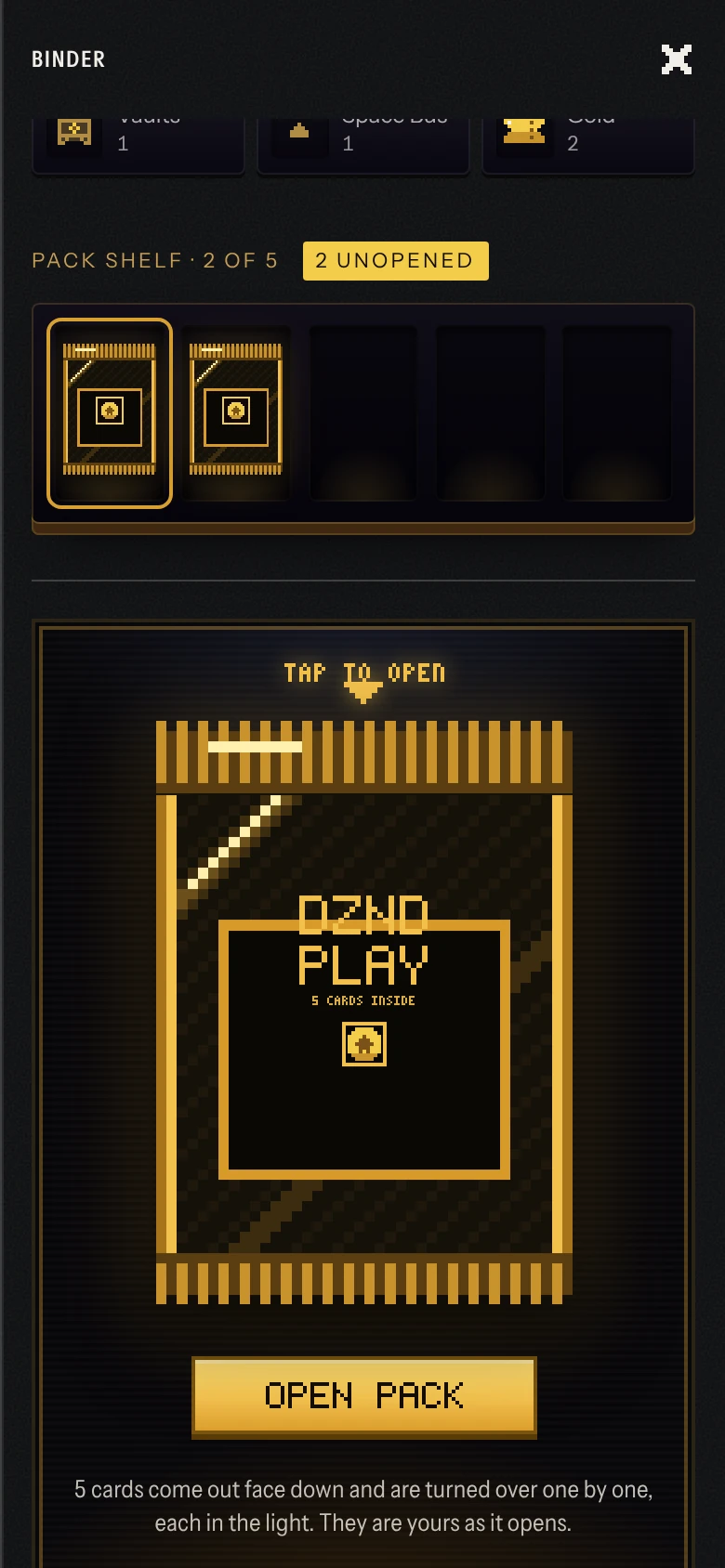
The pack shelf: packs wait sealed.
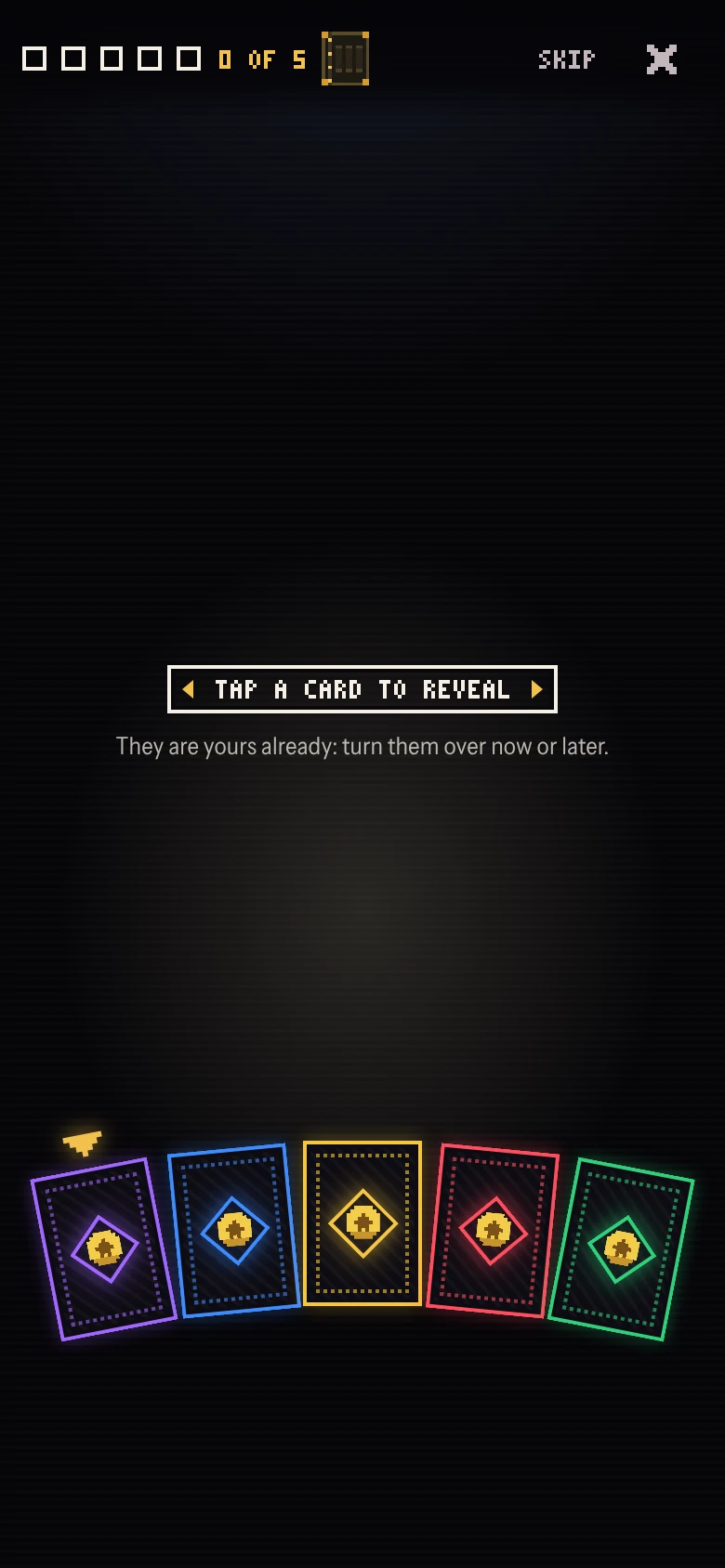
Five cards, dealt face down.
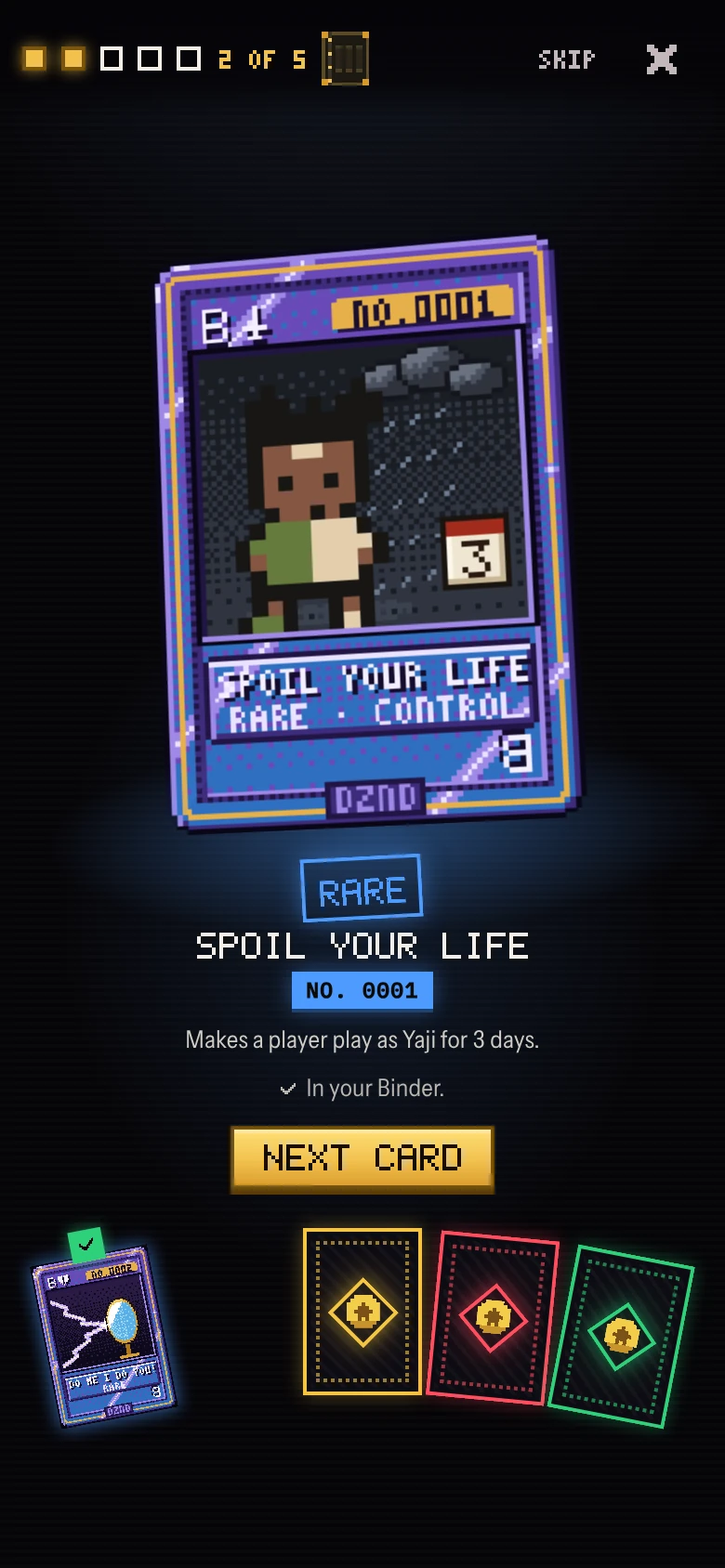
Turned over one by one.
- Gold Tickets
- Rare, drawn by luck alone, and kept for good, each with its own number. A Gold Ticket opens the Gold Ticket Directors.
- Vaults
- A card in a Vault cannot be stolen, whatever card is used against it. A Wooden Vault holds one card, an Iron Vault two.
- Overflow
- A card or pack with no pocket free waits in Overflow, kept for 72 hours while room is made.
- Space Bus
- A new ship for Orbital Wahala for every second level completed in its Levels mode, bound to the player.
- Mana
- Earned in every game and kept in the player’s Coffer, which grows with their level; it buys from the house in Trade.
- Cards in play
- Attacks, guards, counters and luck: a card can take from another player, swap with them, protect, or boost a run.
06 / The community
Six places to talk, trade and play.
One world around them: Lagos at night, seen from the station of Orbital Wahala, each place drawn in the same 8-bit grid as the games.
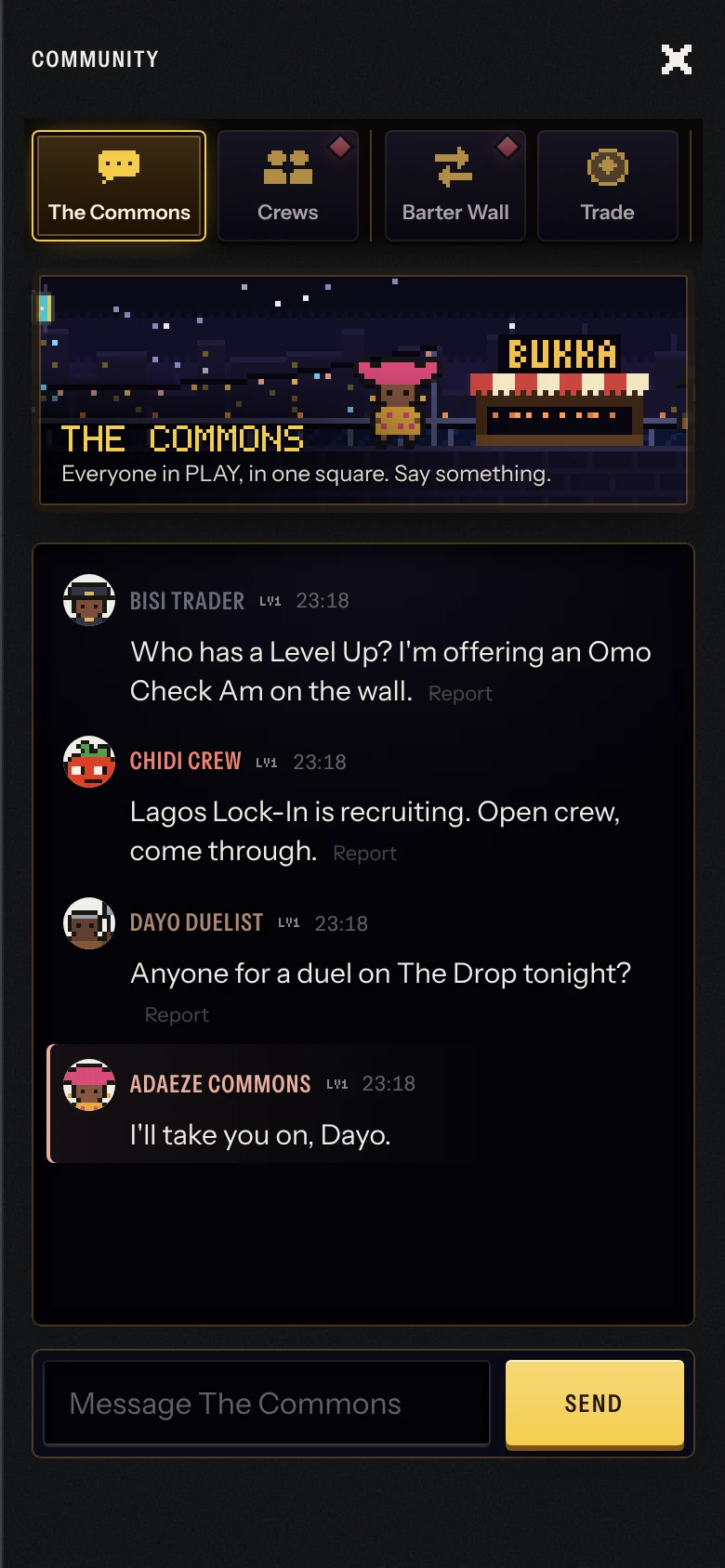
Talk
The Commons
Everyone in PLAY, in one square. Say something.
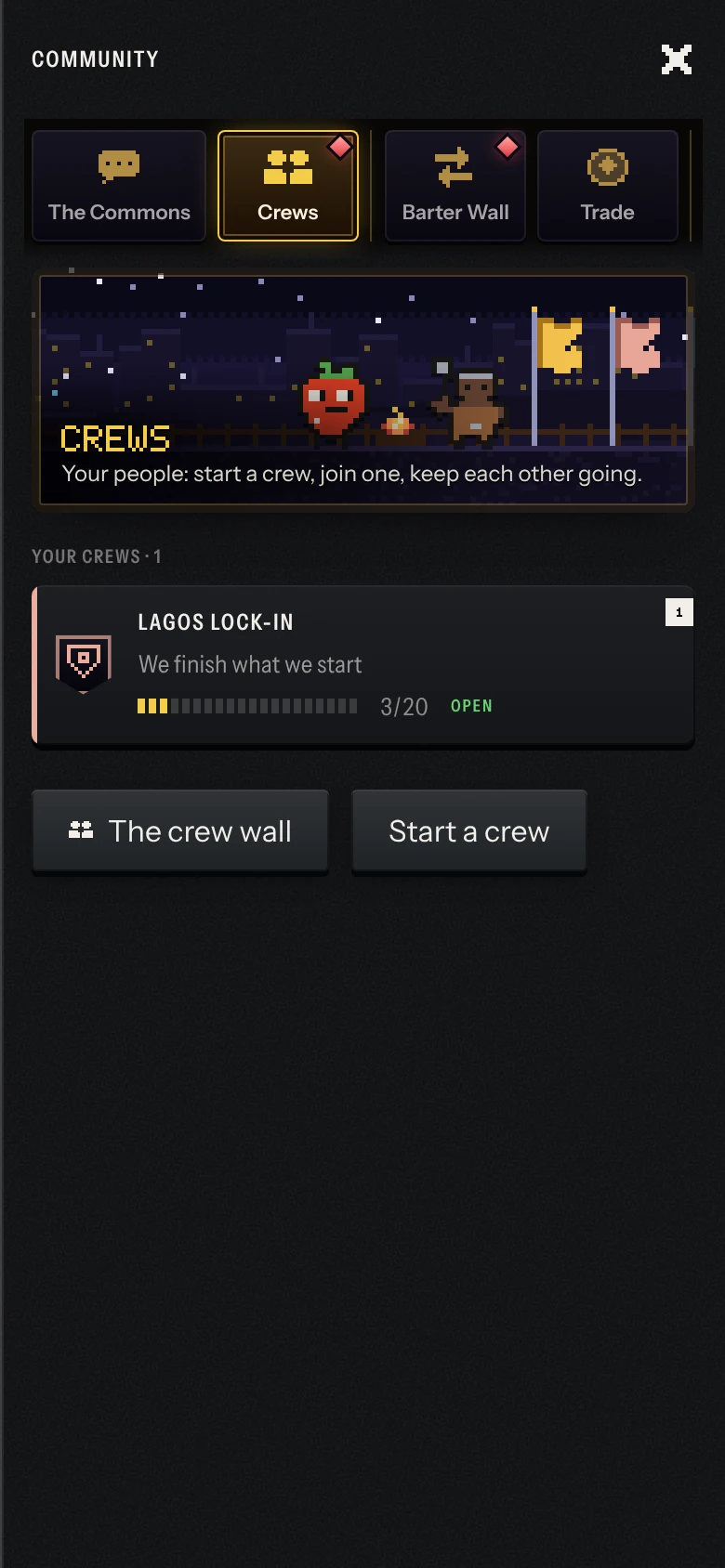
Talk
Crews
Your people: start a crew, join one, keep each other going.
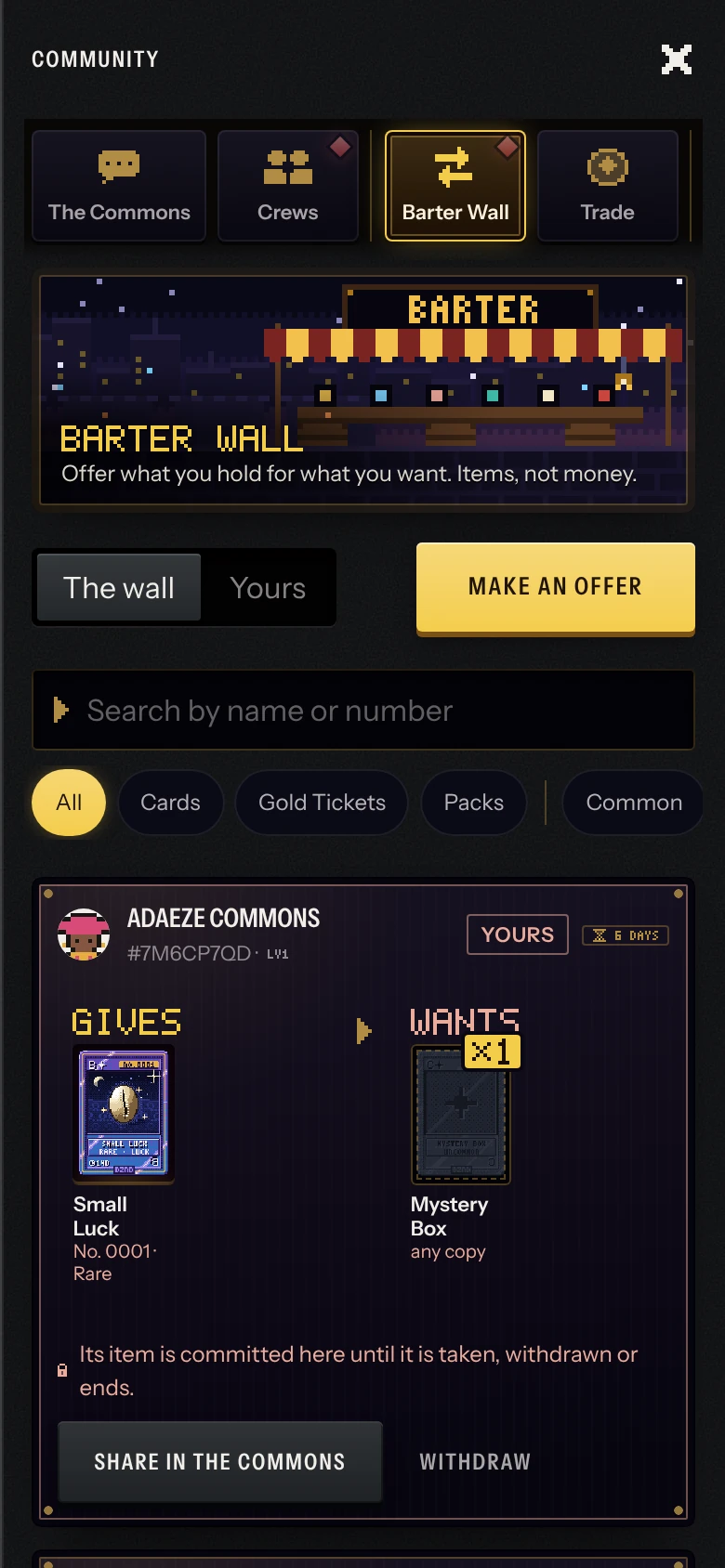
Trade
Barter Wall
Offer what you hold for what you want. Items, not money.
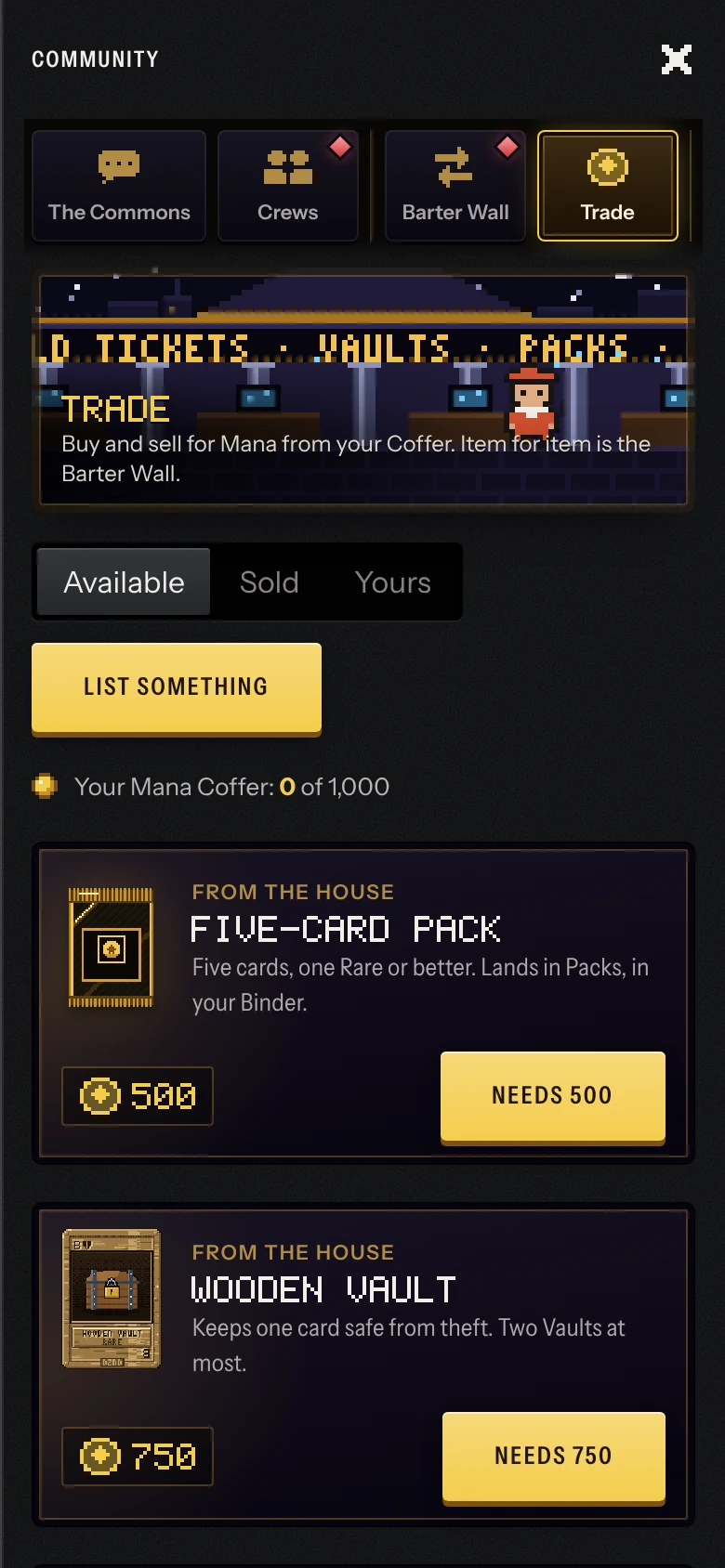
Trade
Trade
Buy and sell for Mana from your Coffer. Item for item is the Barter Wall.
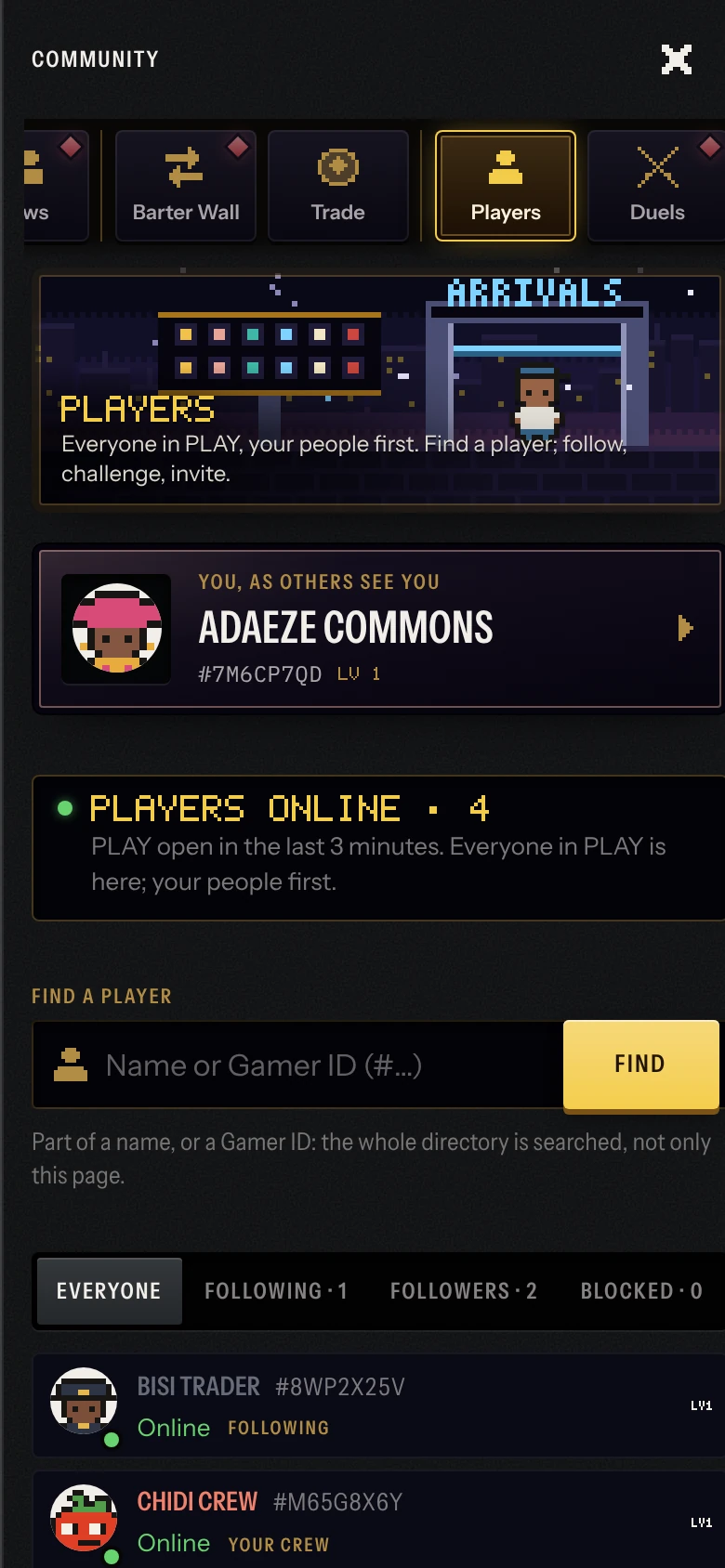
Play
Players
Everyone in PLAY, your people first. Find a player; follow, challenge, invite.
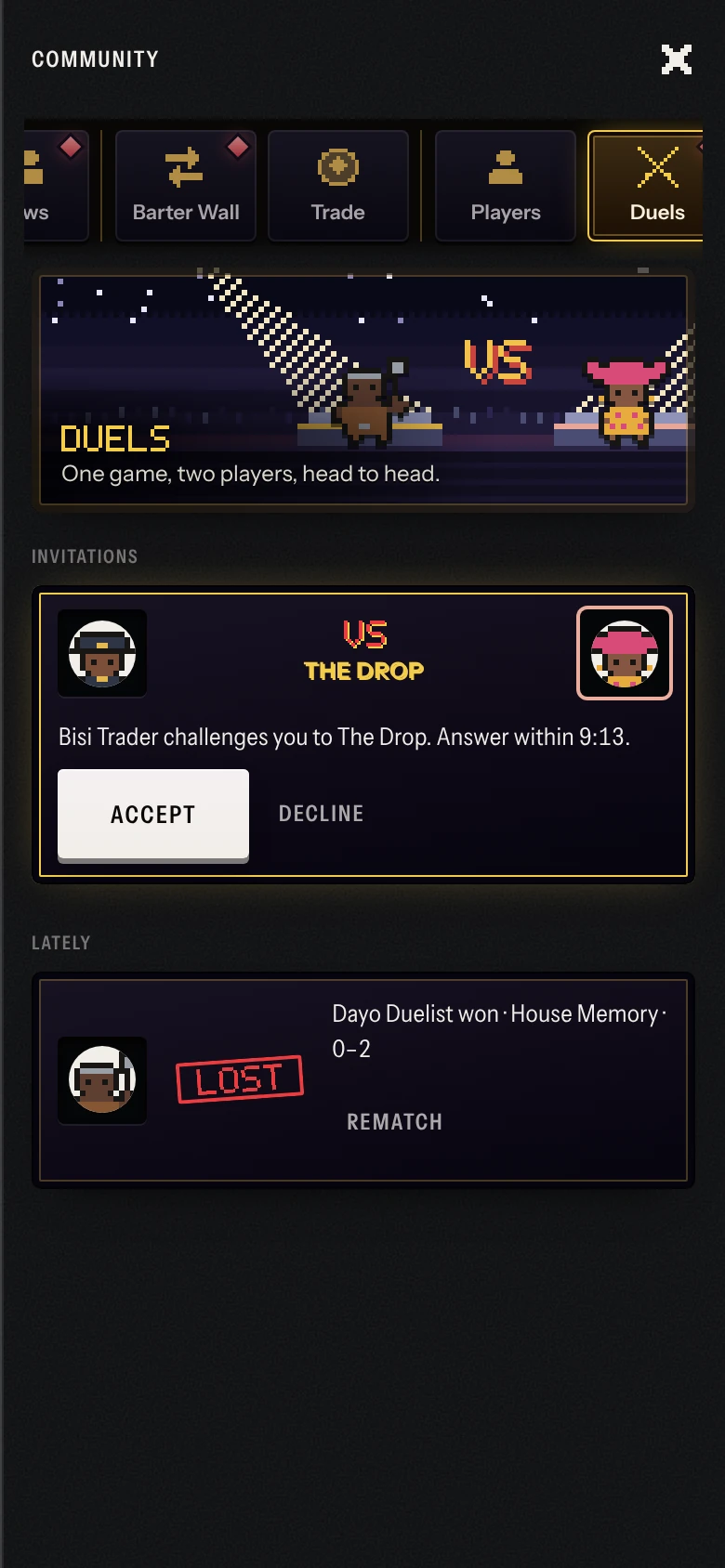
Play
Duels
One game, two players, head to head.
07 / One player
A name and a Director, across every game.
One system holds the games. A player chooses a Director, one of PLAY’s own characters, as their picture. Their lives are shared by every game, and an overall ranking reads across them.
Rookie
The New Arrival
Olopa
The Officer
Pepe
The Hot One
Oji
The Blacksmith
Ada
The First Daughter
Yaji
The Unlucky One
OMO G
The Governor's Daughter
Obtainer Man
The Obtainer
Studio
Studio Director
Labs
Labs Director
House
House Director
The Director
Chosen once, with the player’s name, as their picture in PLAY and on the rankings. The Gold Ticket Directors open with a Gold Ticket, each with an ability of its own.
Lives
Shared by every game, spent only by a game, and given back with time. With none left the cartridges wait, and everything else stays open.
The ranking
Each week and all time, game by game and overall. Anyone plays as a guest; entering the ranking takes a name and an email, which is never shown.
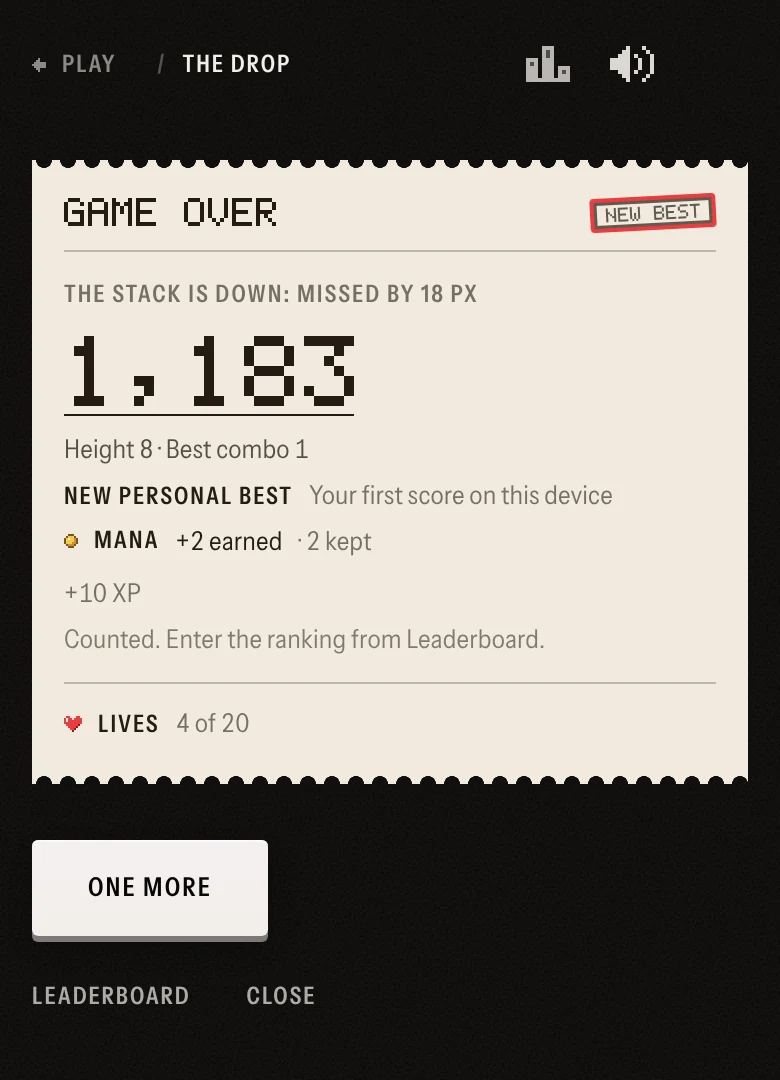
Every run ends on a printed score slip.
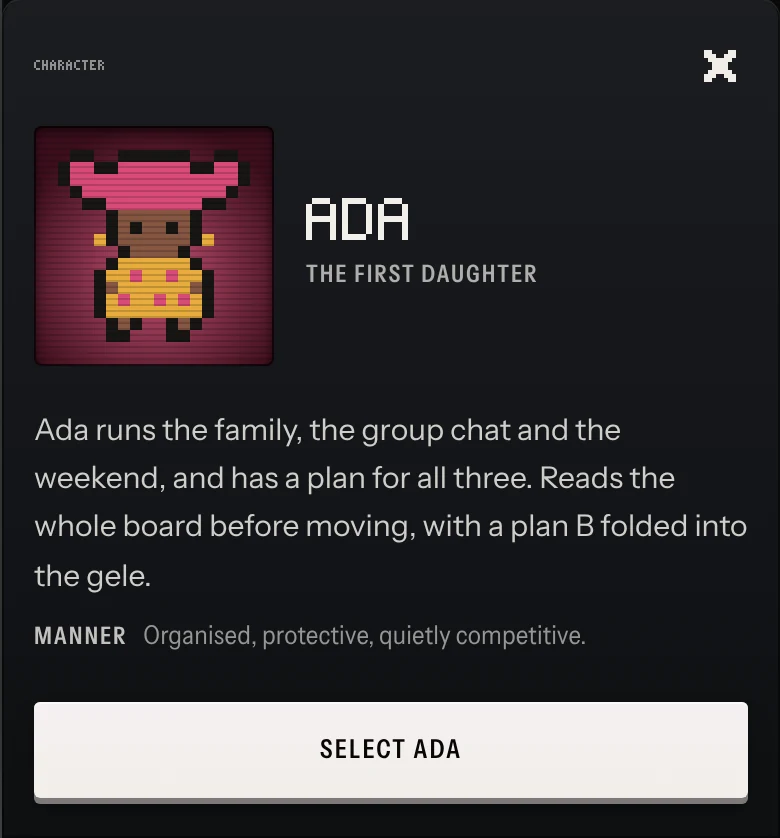
Each Director has a profile of their own before they are chosen.
08 / Run from The House
The house decides; the screen shows.
Everything a player sees is set in The House, and the server checks it again when a game is asked for, so the screen can never start what the house would refuse.
- Each game
- Published or not, under repairs, Premium; its cartridge’s colours, its line and its place on the shelf. A game under repairs refuses to start and keeps every score.
- Each week
- The week’s game and its rule, and a prize when there is one.
- Every run
- Issued and scored by the house’s server, by the same rules the browser plays. A score is the house’s, not the browser’s.
- Every match
- Mama’s Pot is played by 4 to 15 players at once on its own match server, the household against the meat thieves.
- Light by design
- The first games were built with no game engine and no new dependency: the page itself, CSS, one animation loop and one canvas.
09 / DZND’s role
Conceived, drawn and run by DZND.
PLAY is DZND’s own: not a game made for a client, but an arcade the house conceived, designed, built and runs, inside its own website.
- Product
- The system around the games: a player and their Director, lives shared by every game, the weekly and overall rankings, cards, packs and the community.
- Game design
- Each game’s rules, levels and pace, from The Drop’s tower to Mama’s Pot’s match.
- Pixel art
- The Directors, the cartridges, the pixel type and icons, and the games’ worlds, all drawn in code.
- Engineering
- The games in the browser, the server that issues and scores every run, and the match server Mama’s Pot is played on.
- Operations
- The House: each game’s cartridge and status, the week’s challenge and prize, the Directors’ names, the switches.
Living Pages