DZND PLAY, in 8-bit
The look of DZND PLAY, drawn a pixel at a time: its characters, a series of cartridges, a pixel type and icon set, and the maps its games are played on, from the markets of Lagos Island to Mama’s compound.
DZND, then PLAY in gold.
PLAY’s mark is set in its own bold pixel type: PLAY in gold with a shadow cast down and to the right, the house’s name spaced wide above it. It opens the arcade, over Orbital Wahala’s station at night above the Lagos lagoon.
DZND

The icon
DZND’s monogram redrawn on a grid of 24 cells, white on navy, shown at a whole number of screen pixels a cell: 8 on a 192-pixel icon, 21 on a 512, and smaller on Android’s round mask so the monogram stays inside it.
Whole pixels, everywhere.
PLAY is drawn as one interface system. Everything in it comes from the same small grids of whole pixels, filled blocks and never strokes, shown at a whole number of screen pixels to a pixel, so it stays sharp on any screen.
Two kinds of type share the screen. PLAY’s pixel type names the game’s world: titles, ranks, scores, serials. The house’s own type carries everything to read, write or understand.
- A life
- A life spent
- Sound on
- Sound off
- Sound stopped by the browser
- Leaderboard
- Gold Ticket
- Mana
- Locked
- Repairs
- Building
- Premium
- First place
- Loading
- Done
- Something went wrong
- Steal, in Mama’s Pot
- Okada, in Mama’s Pot
One icon set: each icon its own small grid, one path per ink, its states shown by shape as well as colour.
11 Directors, one world.
The Directors are PLAY’s characters, one world of original 8-bit people from Lagos to the house. Each is 16 by 16 pixels in four colours, with a blink, a two-frame walk and a silhouette of its own, so they read apart at 24 pixels and in a single LCD tone.
Rookie
The New Arrival
“New to the house. Every board starts somewhere.”
Curious, quick to learn, unbothered by losing the first one.
Olopa
The Officer
“Keeps the peace on every board. Whistle ready, never in a hurry.”
Patient, fair, impossible to rush.
Pepe
The Hot One
“Hot from the first move. Plays to pepper dem.”
Loud, quick, all in from the first move.
Oji
The Blacksmith
“The blacksmith. Strikes once, strikes true.”
Steady, deliberate, proud of the craft.
Ada
The First Daughter
“First daughter. Has a plan for every level, and a plan B.”
Organised, protective, quietly competitive.
Yaji
The Unlucky One
“Your life no fit spoil pass Yaji!”
Hopeful, distracted, never short of a story about how it wasn't his fault.
OMO G
The Governor's Daughter, a Gold Ticket Director
“Works hard, plays harder, and if it all goes wrong, Daddy has one more chance on standby.”
Bold, stylish, calm until the very last hit.
Obtainer Man
The Obtainer, a Gold Ticket Director
“He obtains, he never steals. Everything comes to meet him.”
Smooth, patient, always standing where it lands.
Studio
Studio Director, a Gold Ticket Director
“Web design and identity. Sees the whole page first.”
Calm, exacting, always a frame ahead.
Labs
Labs Director, a Gold Ticket Director
“Products and technology. Builds what the house runs on.”
Precise, inventive, never without a fix.
House
House Director, a Gold Ticket Director
“Keeps the house. Knows where everything is.”
Warm, watchful, ready before anyone asks.
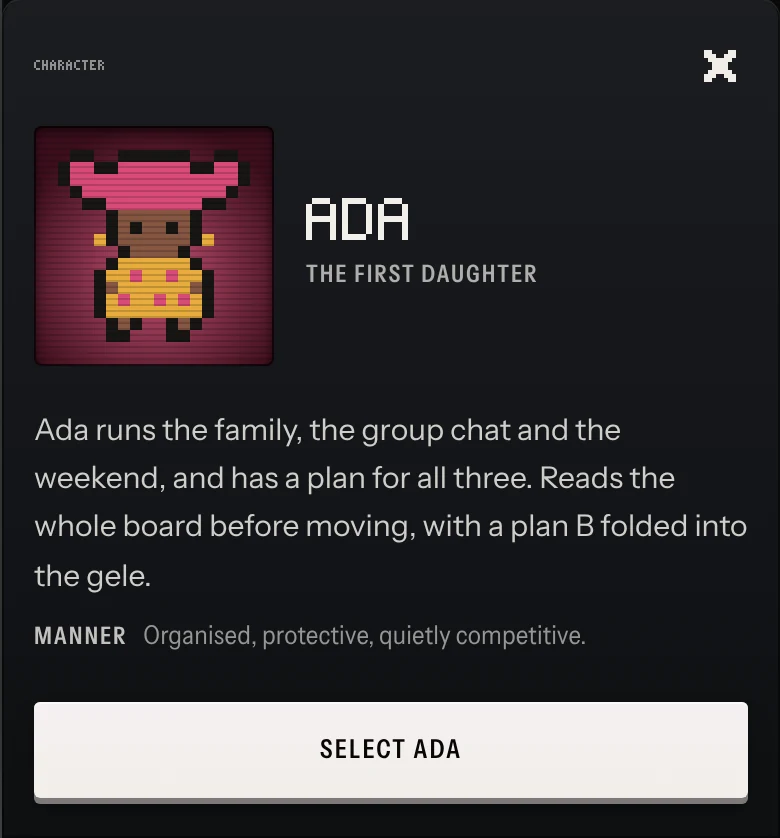
Each Director is a character before they are a choice.
A profile of their own, opened before they are chosen: who they are, their manner, and for some what they are known for saying. Gold Ticket Directors carry abilities of their own; Yaji, the unlucky one, carries a misfortune.
The same sprite is the player’s avatar on the rankings, a passer-by in the world and a player in Mama’s compound.
A series, 44 by 56 pixels.
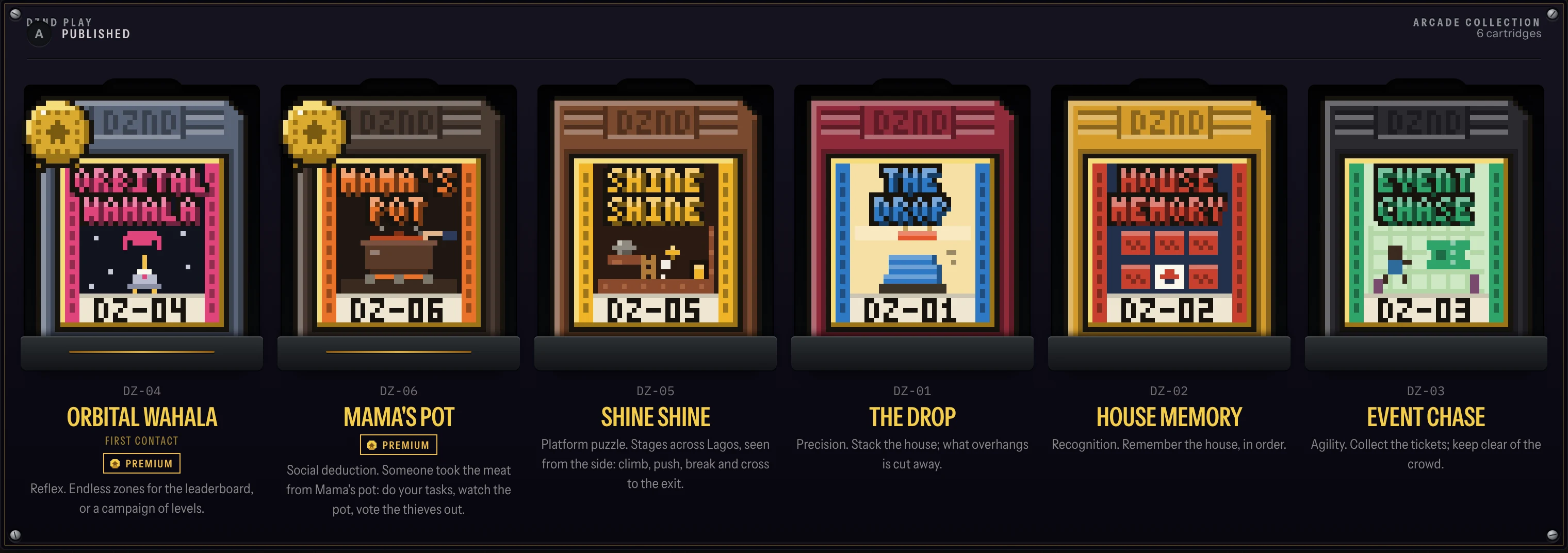
The cartridges take their form from the handheld cartridge, and their colours from the family game cartridges of the nineties in Nigerian homes: wine, mustard, black and slate shells, a gold-foil edge to the label, a catalogue number on its paper foot.
DZ-04
ORBITAL WAHALA: First Contact
Premium
DZ-06
Mama's Pot
Premium
DZ-05
Shine Shine
DZ-01
The Drop
DZ-02
House Memory
DZ-03
Event Chase
Under repairs
Each label carries the game’s title as a logo in two lines of pixel type, outlined and shadowed, over the game’s picture: a tower with the next block falling, cards turned face down, a ticket and someone running for it, a ship firing up at an enemy.
The shell and the label’s band take each game’s two colours, set in The House. The shell’s light and shade are worked out from the first, so any colour keeps its relief.
As made
Published and playable.
Premium
A gold seal: a curation mark, nothing is paid for.
Repairs
Red 8-bit tape across it; scores and progress kept.
Building
The plate of a game still being made, seen by staff only.
Places to play in.
The games have worlds of their own: Orbital Wahala’s levels as a journey across the sky, Shine Shine’s stages across Lagos seen from the side, and Mama’s Pot played across a compound, a university and an office.
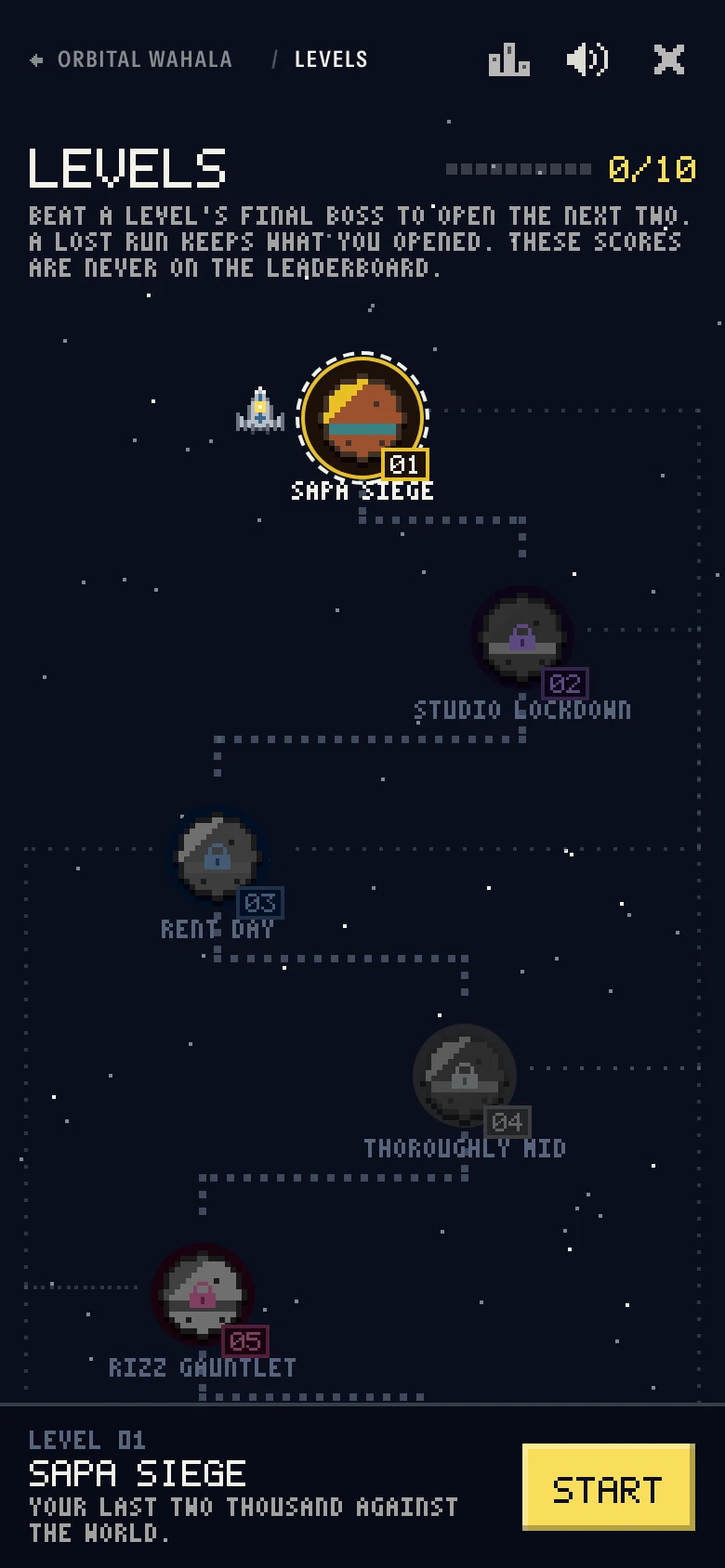
Orbital Wahala: a journey, not a list.
Each level a pixel planet in its zone’s inks, a lit limb, a band and two craters, its number on a tag. A finished level wears a gold flag. Finishing one opens the next two, so the routes step down the sky with a side lane to the one after, and the player’s ship travels between them in steps.
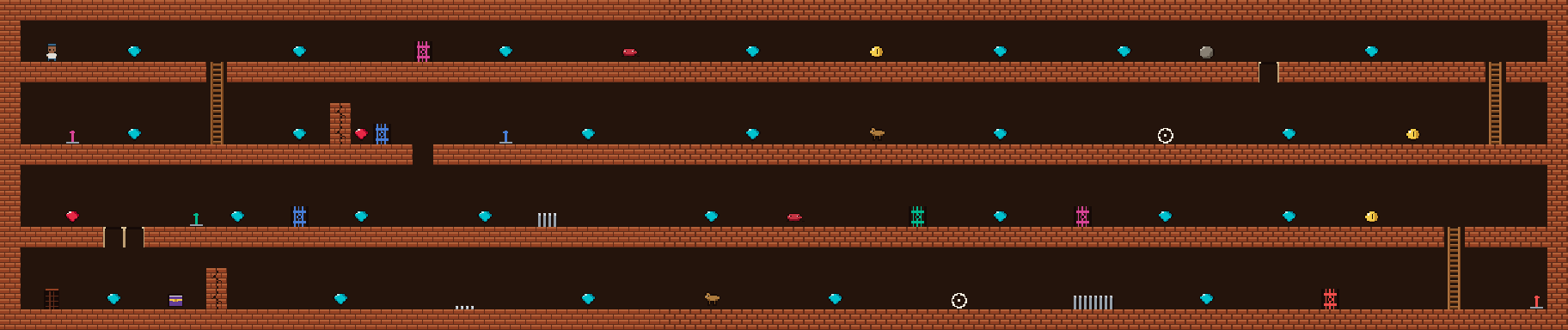
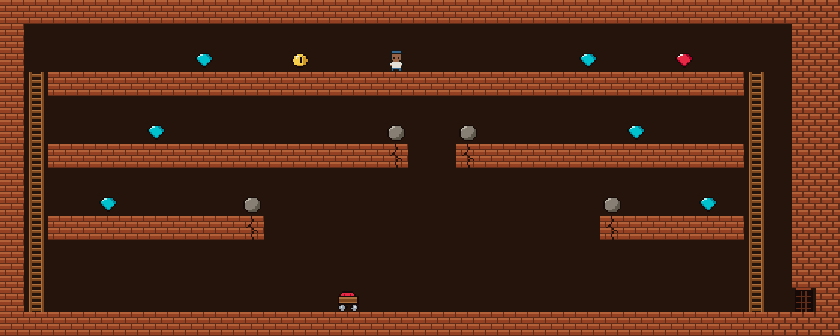
Shine Shine: Lagos Island, from the side.
World 1, the market and the drains: fourteen stages, several screens each way. Three of them, drawn whole:

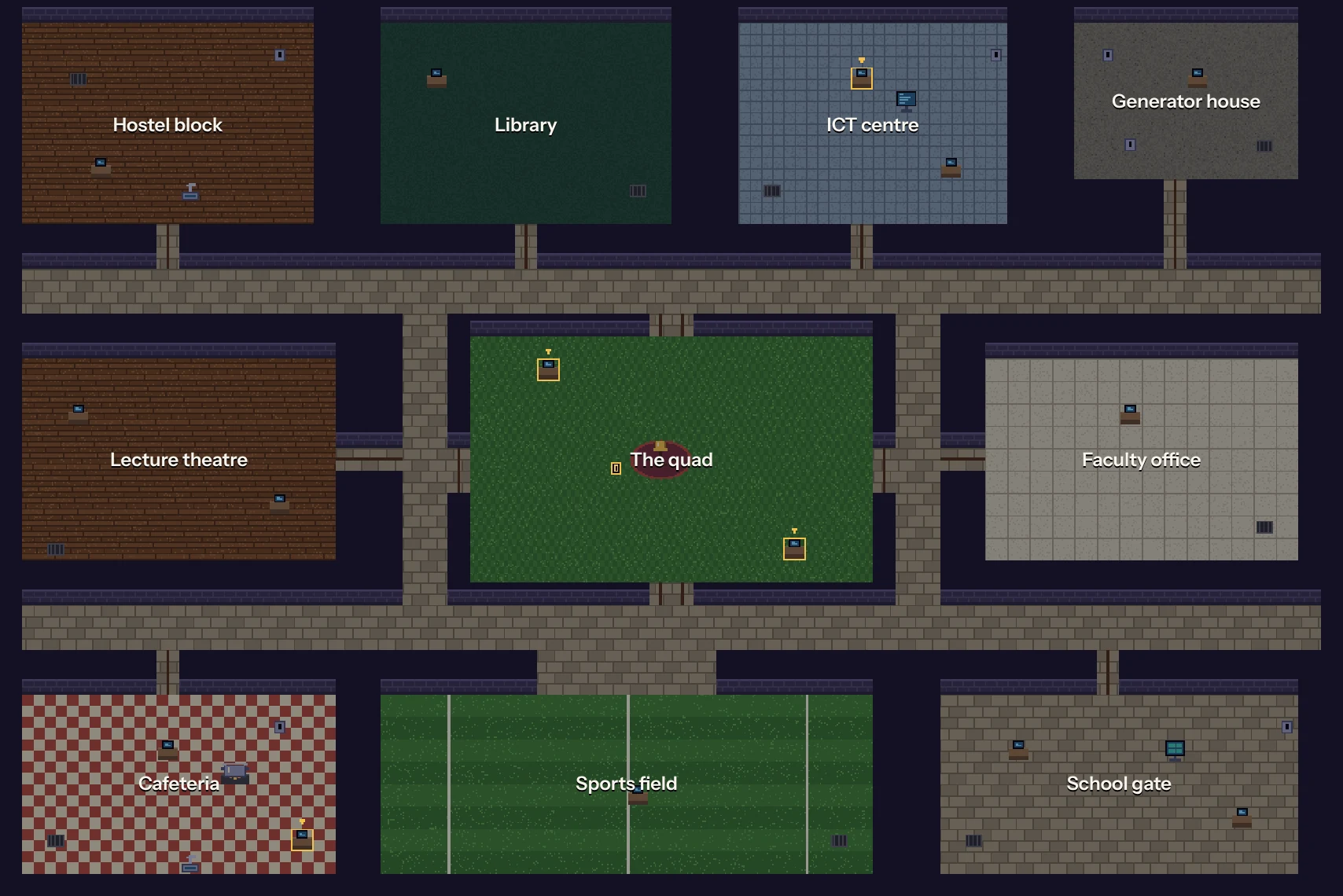
Mama’s Pot: a university, room by room.
The match is played across a whole place, each room named and floored in its own pattern: the hostel block, the library, the quad, the cafeteria’s check, the sports field’s lines.
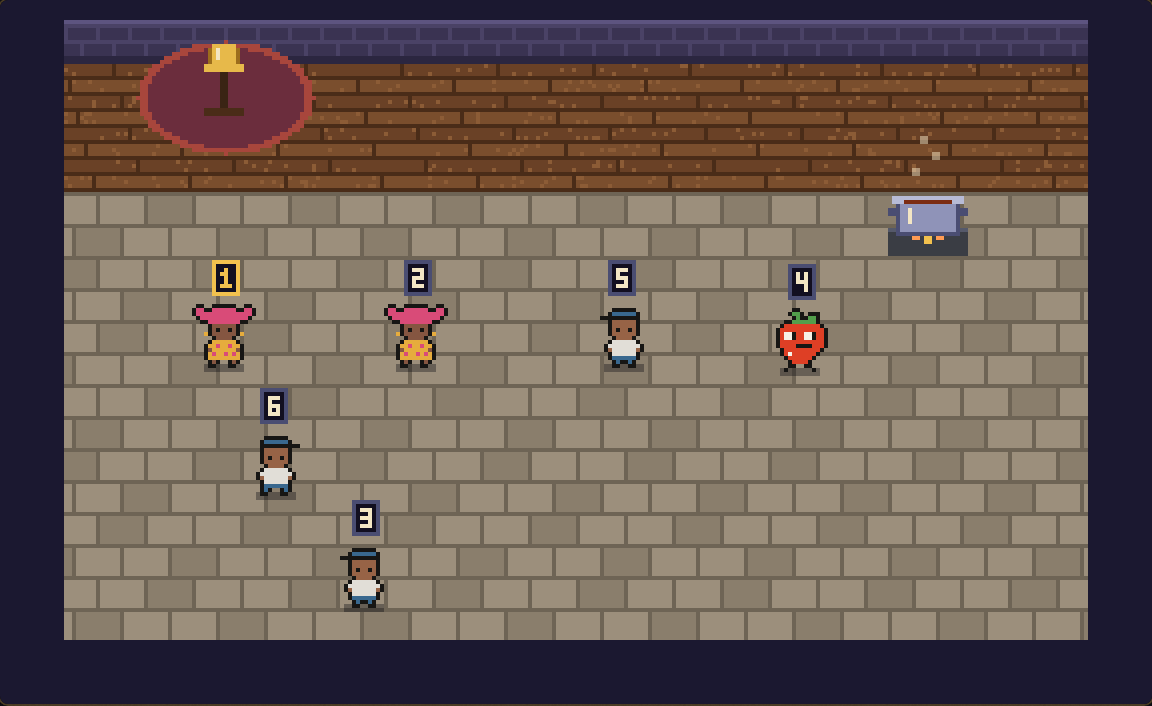
Before a match, the lobby is Mama’s compound, walked about in while it fills, everyone’s Director in it with their seat’s number.
Lotus ’26